Identifying toxic bird foods is the most critical step in ensuring your feathered friend lives a long, healthy life. Sharing your meals with your parrot or canary might feel like a bonding experience, but a bird’s digestive system is incredibly delicate and entirely different from ours.
Many everyday household foods that are perfectly safe—and even healthy—for humans can be fatal to avian species. According to avian veterinarians, accidental poisoning from common kitchen items is a leading cause of emergency clinic visits. If you want to master pet bird care, you must completely eliminate these silent killers from your home environment.
[rank_math_toc]
1. Avocado: The Heart-Stopping Toxin
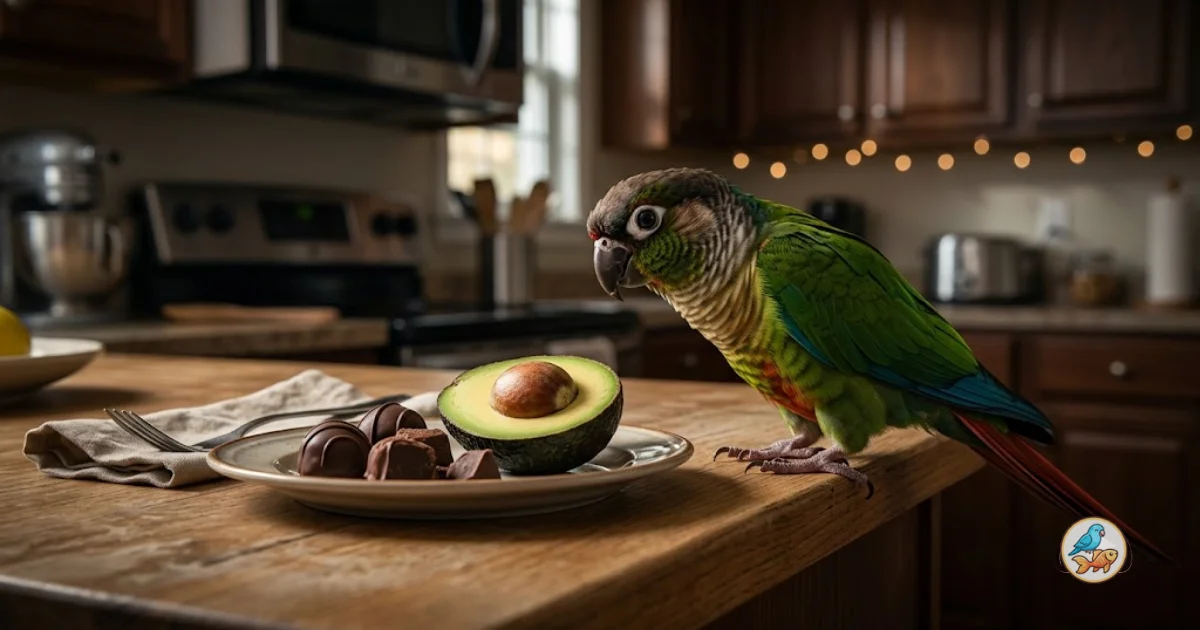
Avocados are celebrated as a superfood for humans, but they are incredibly dangerous for your bird. The leaves, pit, bark, and flesh of the avocado plant contain a fungicidal toxin called Persin. While harmless to us, it is highly poisonous to most birds.
Ingesting even a small amount of avocado can cause severe respiratory distress, fluid accumulation around the bird’s heart, and eventually heart failure. This is arguably the most dangerous of all toxic bird foods because of how rapidly symptoms appear.
Critters Pro Tip: If you are making guacamole, keep your bird securely in its cage in another room. Cross-contamination on your fingers or a cutting board is enough to make a small bird seriously ill.
2. Chocolate and Caffeine: The Nervous System Overload
Just like with dogs and cats, chocolate is strictly forbidden for birds. Chocolate contains theobromine and caffeine, both of which are stimulants. A bird’s fast metabolism cannot process these chemicals safely.
Feeding your bird chocolate or allowing them to sip your morning coffee will lead to hyperactivity, vomiting, a dangerously elevated heart rate, seizures, and potentially death. Dark chocolate and baking cocoa are the most toxic forms due to their high concentration of theobromine.
3. Fruit Pits and Apple Seeds: The Cyanide Trap
Many new bird owners love offering their pets fresh fruit, which is generally a great idea. However, failing to prepare the fruit correctly turns a healthy treat into a deadly hazard.
The seeds of apples, pears, and the pits of cherries, peaches, and plums contain amygdalin, a compound that converts to cyanide when digested. Always slice fruit carefully and remove every single seed or pit before offering it to your parrot.
4. Onions and Garlic: Red Blood Cell Destroyers
Whether raw, cooked, or powdered, onions and garlic are highly toxic bird foods. They contain sulfur compounds that chew through a bird’s red blood cells, leading to a severe condition called hemolytic anemia.
- Symptoms of Onion Toxicity: Weakness, labored breathing, and lethargy.
- Hidden Dangers: Beware of feeding your bird pre-packaged human meals or crackers, as onion and garlic powders are widely used in processed foods.
5. High Salt and Fat: The Slow Poison
While a single potato chip won’t kill your bird instantly, high-salt and high-fat foods act as slow poison. Birds cannot excrete large amounts of salt efficiently. A salty snack can cause excessive thirst, dehydration, and fatal kidney failure over time.
| Toxic Human Food | Safe Avian Alternative |
|---|---|
| Salty Crackers / Chips | Unsalted Air-Popped Popcorn |
| Chocolate / Candy | Fresh Berries (Blueberries, Raspberries) |
| Avocado | Steamed Sweet Potato or Squash |
Conclusion: Keep Their Diet Natural
The best way to practice safe pet bird care is to stick to a species-appropriate diet. High-quality pellets, fresh vegetables, and bird-safe fruits should make up the majority of their meals. By keeping these toxic bird foods completely out of their reach, you ensure your feathered companion stays vibrant and vocal for years to come.
What is your bird’s favorite healthy treat? Share your ideas in the comments below, and send this article to a new bird owner to help keep their pets safe!