
🌿 How to Quarantine New Aquarium Fish: 4 Step Beginner Guide
Adding new fish to an established aquarium is one of the most rewarding parts of the hobby, but it is also the moment when your tank is most vulnerable to catastrophe. Many beginners focus entirely on the aesthetics of their aquascape, often overlooking the biological risks introduced by new arrivals.
Learning how to quarantine new aquarium fish is the single most effective way to protect your existing livestock and ensure the long-term health of your aquatic environment. Establishing a dedicated isolation process prevents massive tank crashes and saves your pet investment.
🛑 Why Quarantine Is Not Optional: The primary danger of introducing new fish is the risk of “hitchhiking” diseases, parasites, or harmful bacteria. Fish in pet stores are often kept in crowded conditions with centralized filtration systems, meaning a single sick fish can expose hundreds of others to pathogens.
🦠 The Hidden Killers in Untreated Fish Tanks
Even if a fish looks completely healthy at the local pet store, it may be a silent carrier of common aquarium ailments. When you do not master how to quarantine new aquarium fish, you risk introducing highly contagious pathogens into your home ecosystem:
-
Ich (White Spot Disease): A devastating protozoan parasite that attacks the skin and gills of stressed fish.
-
Velvet (Oodinium): A rapid parasite that gives fish a dusty, gold-colored coating and claims lives quickly.
-
Flukes & Internal Worms: Microscopic worms that drain your fish’s energy and damage their vital organs from the inside.
If introduced directly into your display tank, these pathogens can spread exponentially, potentially leading to the sudden loss of your entire livestock population.
🧫 4 Steps to Setup Your Quarantine Tank Successfully
You do not need an elaborate or expensive setup for an isolation aquarium. In fact, simplicity is preferred. Follow this streamlined how to quarantine new aquarium fish setup process:
1️⃣ Equipment and Simplicity
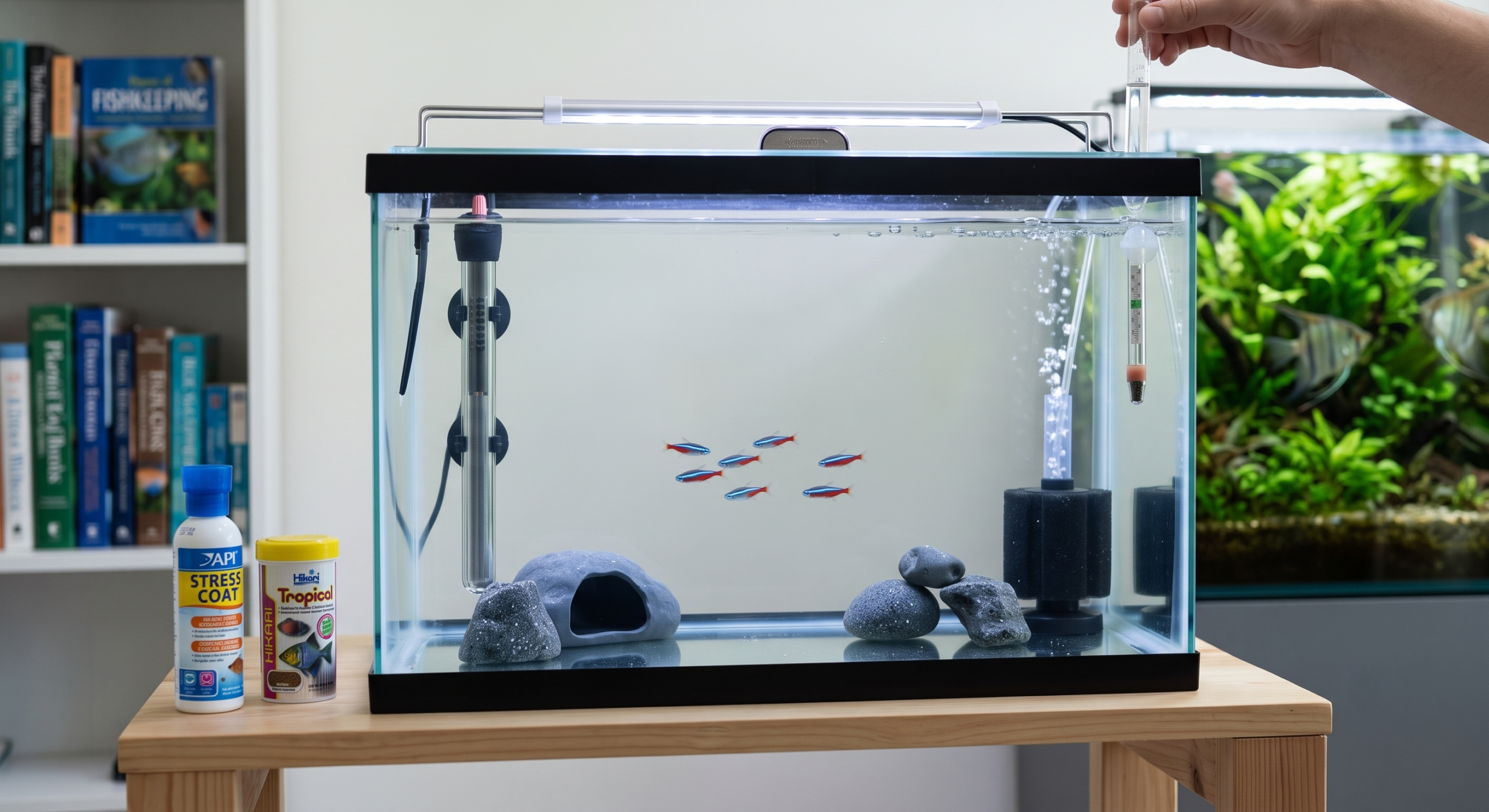
A basic 10-to-20-gallon bare-bottom tank equipped with a simple sponge filter, a reliable aquarium heater, and a couple of plastic pipes or ceramic caves for hiding spots is more than sufficient. Because this tank will not house permanent residents, it does not need to be heavily decorated or planted.
2️⃣ The Instant Cycle Hack
It is crucial to understand that your isolation tank must be fully cycled just like your main aquarium. Beneficial bacteria are required to process the toxic ammonia produced by the new arrivals.
Many successful aquarists keep a spare sponge filter running continuously in their main display tank. When they need to bring new fish home, they simply move that seasoned sponge filter to the isolation tank to provide an instant biological cycle.
📊 Quick Quarantine Setup Reference Checklist
| ⚙️ Component | 🛠️ Ideal Setup Specification | 💡 Purpose |
| Tank Size | 🧪 10 to 20 Gallons | Easy to monitor and dose medications if needed. |
| Filter Type | 🧽 Air-Powered Sponge Filter | Gentle flow, safe for weak fish, houses bacteria. |
| Decorations | 🪵 PVC Pipes / Plastic Caves | Provides secure hiding spaces without absorbing medicine. |
| Substrate | 🛑 None (Bare Bottom) | Allows you to easily spot parasites and siphon waste. |
⏳ The Standard Quarantine Protocol
The recommended duration for a proper quarantine period is between four to six weeks. This strict timeframe allows enough time for latent symptoms of underlying fish diseases to manifest naturally.
During this observation period, you should follow these three golden daily rules:
-
1. Observe Daily
Watch closely for changes in swimming behavior, breathing rates, appetite, or physical spots.
-
2. Monitor Water Quality
Test the water parameters frequently. Ammonia and nitrite should strictly remain at 0 ppm.
-
3. Perform Regular Maintenance
Frequent small water changes are essential to keep stress levels low and water parameters pristine.
If the fish show no signs of illness after the quarantine period, they can be safely introduced to the main aquarium. If they become ill, however, you can treat them effectively in the quarantine tank without exposing your entire main system to harsh medications, which can sometimes ruin your main biological filter or kill live plants.
🔚 Conclusion
Patience during this introductory phase is the true hallmark of a responsible and successful fishkeeper. By implementing this basic how to quarantine new aquarium fish guide, you build an unbreachable line of defense for your main display aquarium.
🔗 Recommended Aquarium Guides:
-
Internal Link: To make your display tank look beautiful once your fish are safe, view our list of the Best Easy Aquarium Plants for Beginners.
-
External Reference: For professional veterinary insights into checking fish health and managing pathogens, check out the World Aquatic Veterinary Medical Association (WAVMA) Resources.