
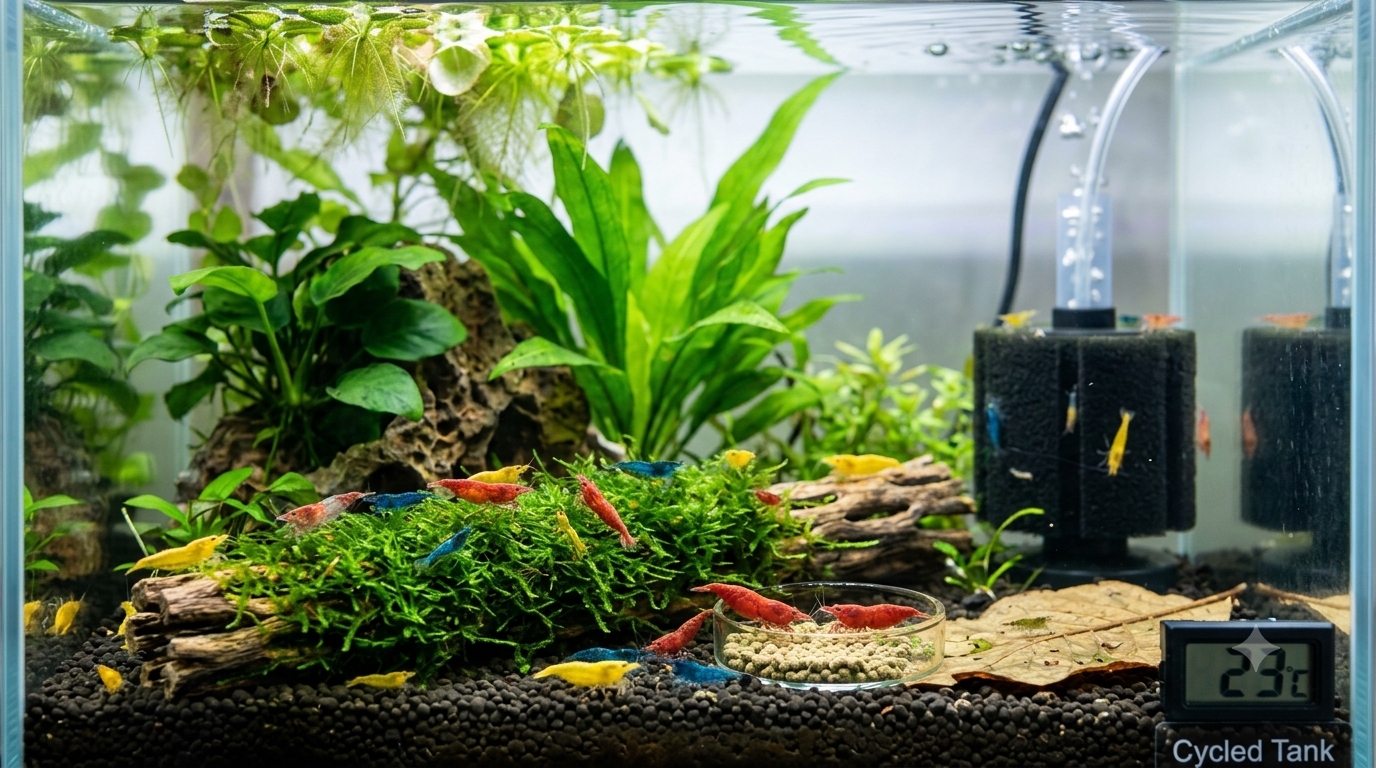
🌿 Dwarf Shrimp Care Guide: 5 Steps to Setup Your First Nano Tank
In recent years, a massive shift has taken place in the aquarium hobby. More and more aquarists are moving away from traditional, bulky fish tanks and turning toward high-prestige, vibrant nano shrimp tanks.
Dwarf shrimp—especially species from the Neocaridina family like the famous Red Cherry Shrimp—have skyrocketed in popularity. They are colorful, incredibly fascinating to watch, require very little space, and can comfortably thrive in a 5-to-10-gallon aquarium.
💡 Ready to Start? If you want to start your own miniature underwater colony, this ultimate dwarf shrimp care guide will walk you through everything you need to succeed in the hobby.
🛡️ Why Keep Dwarf Shrimp?
Unlike most aquarium fish, dwarf shrimp have an incredibly low bioload, meaning they produce very little waste. This makes them the perfect candidates for low-maintenance nano aquariums.
-
Nature’s Cleaning Crew: They spend their day constantly scavenging your tank and eating unsightly algae off your plants, substrate, and rocks.
-
Minimal Space Required: Perfect for desktop setups, study rooms, or small apartments where large tanks won’t fit.
🧫 Setting Up Your Nano Tank: Dwarf Shrimp Care Guide
Creating a safe home for your shrimp requires focusing on three core components:
1. The Right Filter (Crucial)
Standard power filters or hang-on-back (HOB) filters have high suction power that will instantly suck up and kill tiny baby shrimp (shrimplets).
-
The Solution: Always use a Sponge Filter powered by an air pump. It provides excellent biological filtration and creates a safe surface where shrimp can graze on microscopic food particles (biofilm).
2. Substrate & Live Plants
Dwarf shrimp love heavily planted environments. Live plants like Java Moss, Anubias, and floating water weeds provide essential hiding spots during their molting phase (when they shed their old shells and are highly vulnerable).
-
Substrate Tip: For beginner-friendly Neocaridina shrimp, standard inert gravel or specialized dark aquarium sand is perfect.
📊 Ideal Water Parameters for Dwarf Shrimp
Maintaining stable water parameters is the secret to a thriving shrimp colony. Sudden shifts in water quality can trigger failed molts, which is the leading cause of shrimp mortality.
| 🌡️ Parameter | 📈 Ideal Range for Neocaridina (Cherry Shrimp) |
| Tank Size | 🧪 5 – 10 Gallons (Minimum) |
| Temperature | ☀️ 21°C – 25°C (70°F – 77°F) |
| pH Range | 💧 6.8 – 7.8 |
| Ammonia / Nitrite | 🛑 0 ppm (Strictly Cycled) |
| Nitrate | ⚠️ Below 10 ppm |
| GH (General Hardness) | 🐚 4 – 8 dGH (Essential for shell development) |
🦎 Understanding the Shrimp Molting Process
To fully master this dwarf shrimp care guide, you must understand molting. As shrimp grow, they outgrow their hard exoskeletons. They will cast off their old shell to grow a new, larger one.
During the first 48 hours after shedding, their new skin is extremely soft. They will hide deeply inside live plants or small caves to avoid being stressed. Ensuring your water has the right General Hardness (GH) values gives them the calcium and minerals needed to build a strong new shell successfully.
🍽️ Feeding Your Shrimp Colony Safely
Dwarf shrimp are natural omnivores and scavengers. In a well-established aquarium, they will spend 90% of their time eating natural algae and biofilm. However, to ensure they get enough minerals for shell growth, you should supplement their diet:
-
Commercial Foods: High-quality sinking shrimp pellets or algae wafers 2–3 times a week.
-
Blanched Vegetables: Zucchini, spinach, or hulled peas (boiled for 2 minutes and cooled) make an excellent, vitamin-rich treat.
-
Botanicals: Adding dried Indian Almond Leaves (Catappa leaves) into the tank introduces natural tannins, mimics their wild habitat, and promotes healthy biofilm growth.
🛑 Pro Tip: Never overfeed your shrimp! Leftover food will decay rapidly, spiking toxic ammonia and killing your sensitive colony. If they don’t eat the offered food within 2 hours, remove it from the tank immediately.
🔚 Conclusion
Setting up a dedicated nano tank using this dwarf shrimp care guide is one of the most rewarding branches of modern aquaristics. By keeping your water stable, using a shrimp-safe sponge filter, and providing plenty of live moss, your small colony will quickly multiply into a stunning, bustling community.
🔗 Recommended Guides:
Be sure to read our detailed guide on Best Easy Aquarium Plants for Beginners to landscape your nano tank safely.